
Tri-Power Night Squadron · Engineering & gameplay development story
300 km/h.
No right way up.
Twin blue plasma trails cut through the night. A crimson side-pod fires. Rocket 01 climbs the wall, locks onto the ceiling, and carries the race at 44 metres of elevation.
Then the ceiling ends.
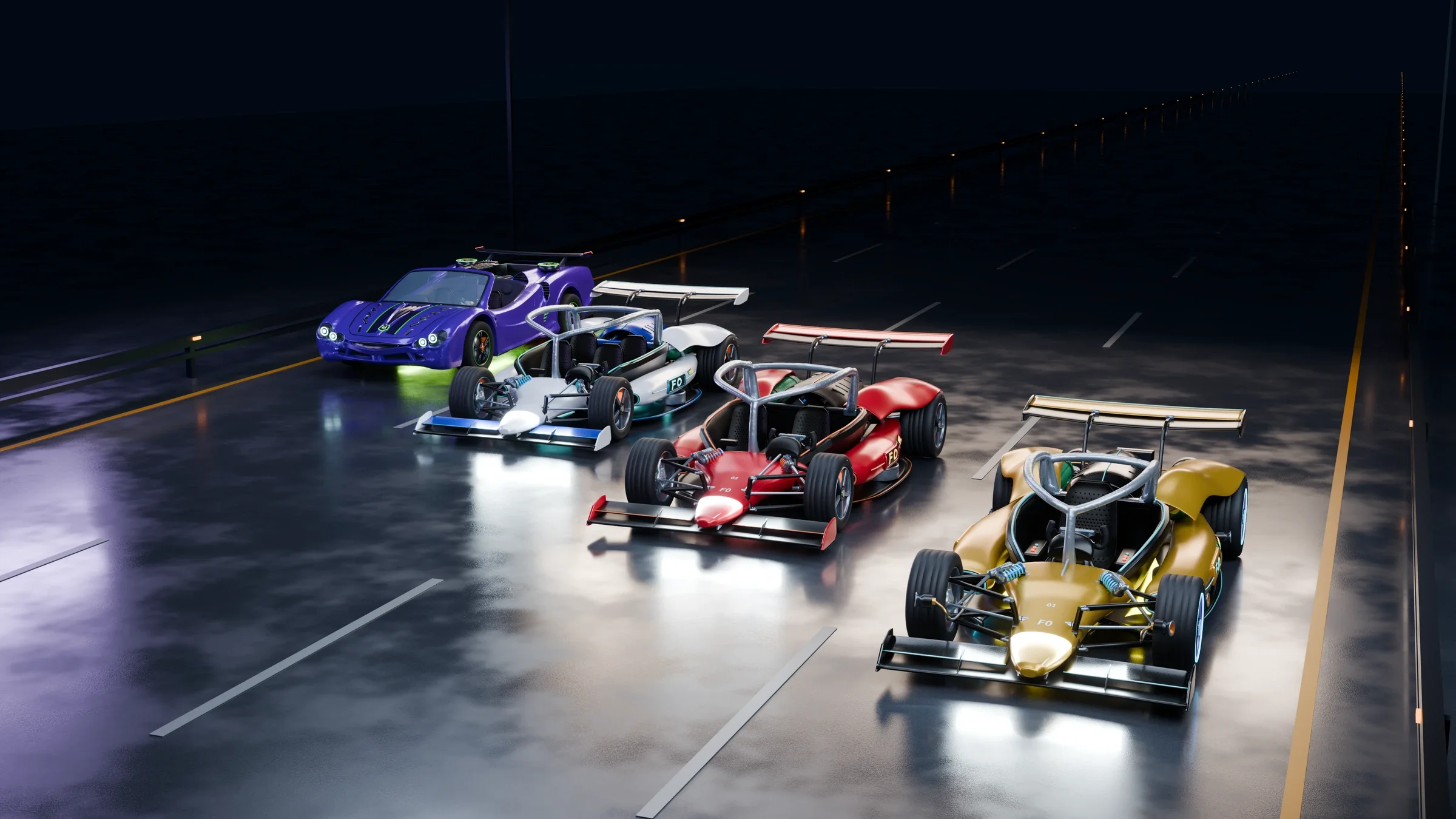
A timed one-lap browser challenge with three original spacecraft, five liveries and three handling styles. Keyboard, pointer, touch and gamepad inputs are available.
The Night Squadron, Helix Vault and Tri-Power surface-combat sequence are development studies. Wheel-and-pedal input is being tested; racing-rig and live-data work are in in-house beta.
The Helix Vault study puts F0: Space Race’s developing Tri-Power concept under pressure: forward thrust, lateral attack, and independent control over attachment to the racing surface. At roughly 85 metres per second—more than 300 km/h—the next decision is already arriving.
Three systems.
Three different decisions.
Steering, throttle and braking form the familiar racing loop. Tri-Power adds another question: which surface should carry the machine next?
Build the speed.
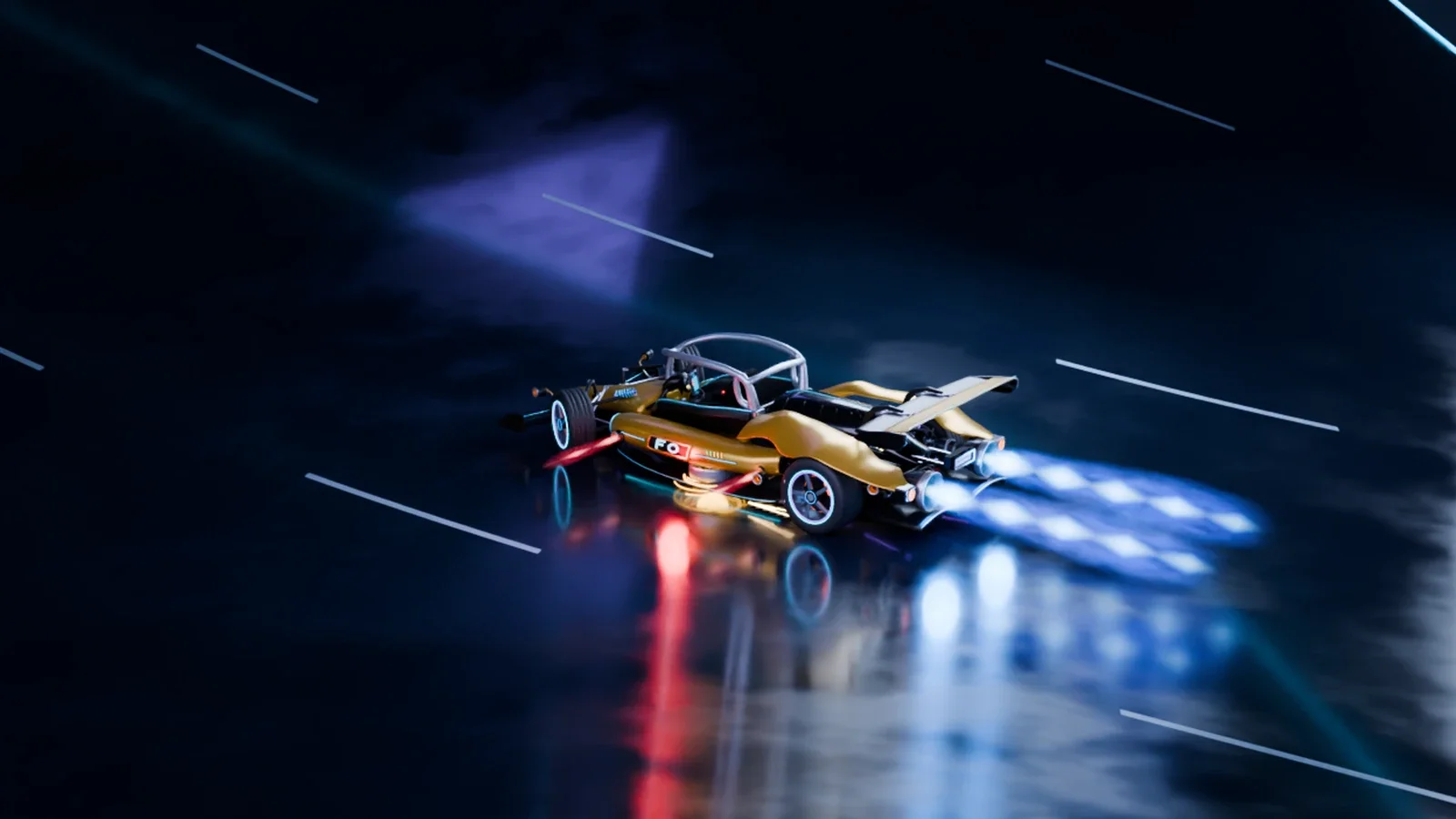
Twin cobalt-blue rear plumes give the sequence its forward drive. Their job is clear: keep momentum through the neon highway and into the next transition.
Take the line.
Crimson lateral thrusters fire from the side-pods. A short impulse becomes a lane check, an attacking move, or the start of a bank onto a vertical wall. The red burst reads separately from the blue propulsion behind it.
Choose the surface.
Two independent turbines handle suction and reverse-blow. Amber marks vacuum lock. Cyan marks blow. Splitting their states makes attachment, release and rotation distinct parts of the proposed controls.
Read the warning.
Change the surface.
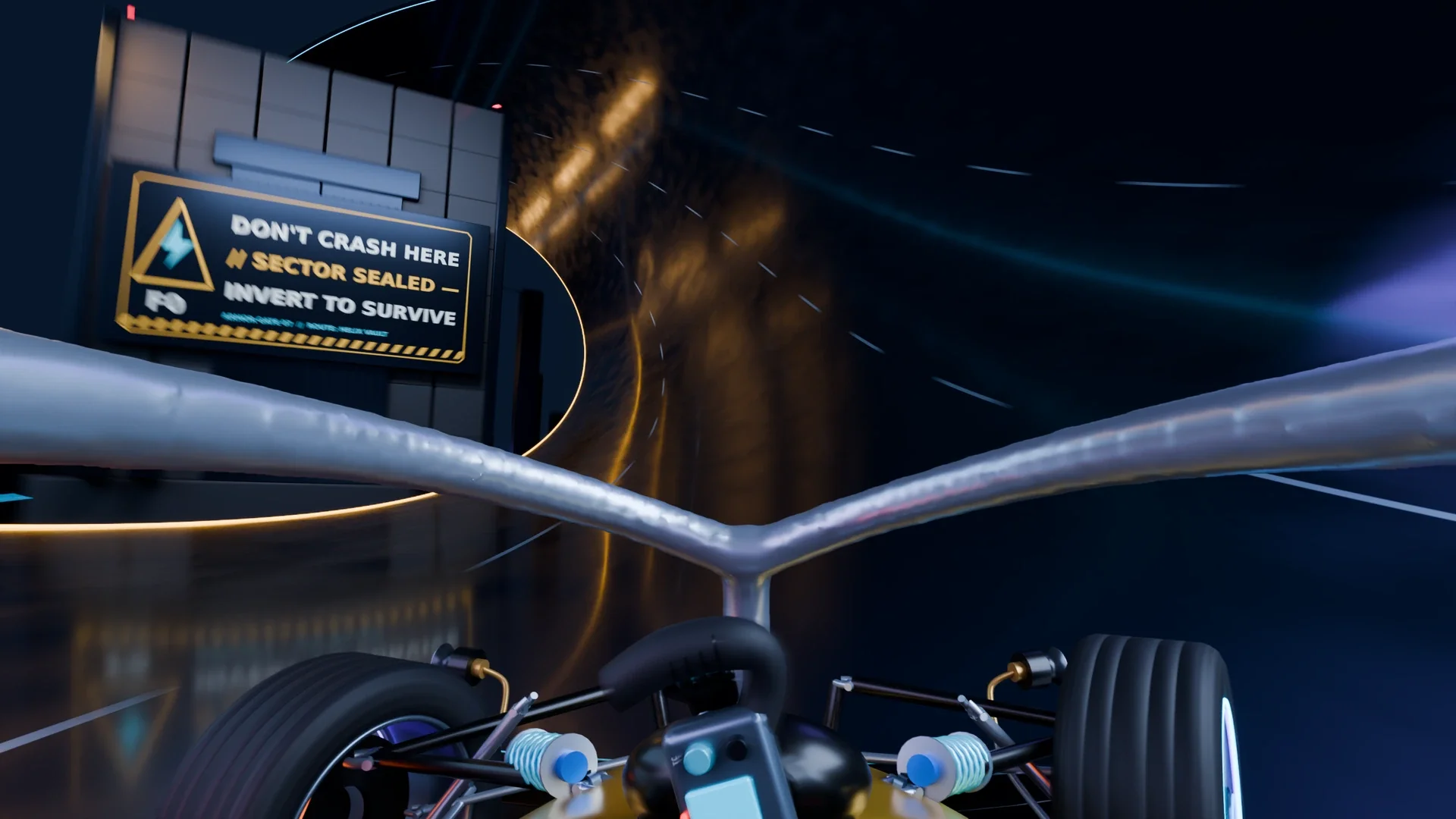
From Rocket 01’s Halo cockpit, the bulkhead is a command to change the route. The Helix Vault winds the machine from highway to wall to ceiling, then holds it upside down at 44 m elevation.
The Zero-Rail Zones leave the edge unguarded. Full amber vacuum lock gives the inverted run a readable state: both turbines are committed to the surface. The scene makes the loss of that state immediately consequential.
Let go.
Then own the landing.
The canyon spans 220 metres. The release is deliberate: reverse one turbine into cyan blow, retain independent control of its partner, and use the asymmetric state for a 180° mid-air detach barrel roll.
The landing has its own decision. The study contrasts two approaches with different visual and handling intentions.
Slam-Lock.
Bring both turbines back to suction and commit to the deck. The authored touchdown uses sparks and an earlier return to exit traction to make the aggressive choice readable.
Cushion.
Carry reverse-blow into the landing phase for a softer touchdown. Cyan keeps that intent visible while the machine settles toward the surface.
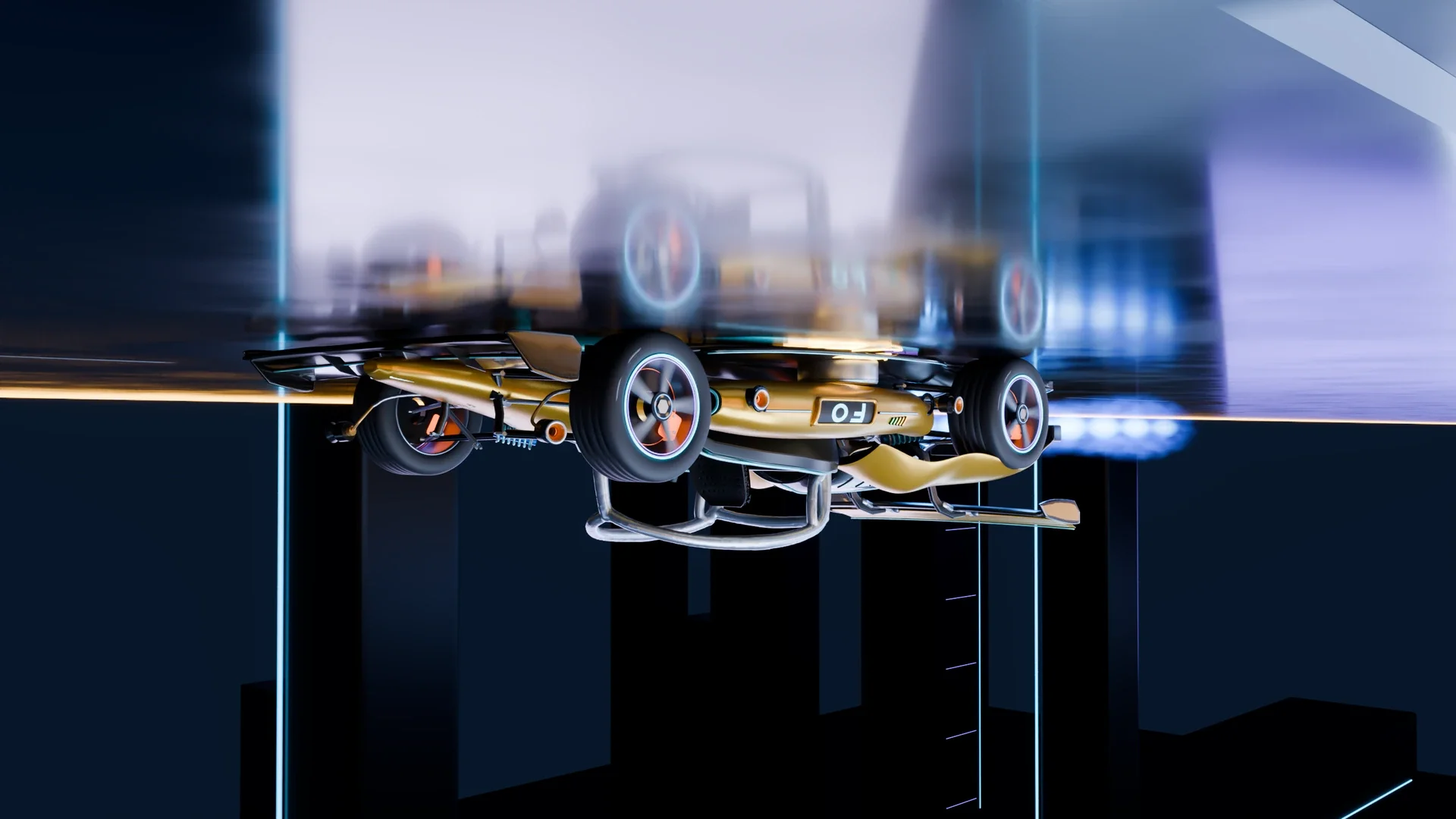
Blue builds speed. Crimson changes the line. Amber holds it. Cyan releases and cushions. The colors give a fast sequence a control language you can follow.
Helix Vault imagery and telemetry describe an authored cinematic study. Vehicle dynamics, full-race mechanics and wider hardware support remain in development.
Meet the Night Squadron.
Four distinct silhouettes carry the Tri-Power direction from the drawing board into the night.
Rocket 01.
Gold and a woven carbon-Kevlar finish put the lead machine at the front of the night run. Rocket carries the cockpit perspective through the Vault’s changing surfaces.
Thrust 02.
A crimson body over satin carbon keeps the second machine sharp under the highway lights. Its stance gives the squadron a different visual weight beside Rocket.
Concept 04.
The Glacier 2+2 study broadens the fleet’s proportions. It gives the lineup a contrasting shape and another route through F0’s vehicle design work.
F0-Orochi.
The fan favorite returns in Ice White. Its sculpted form stays clear against the night, with a finish that lets the bodywork speak before the effects arrive.
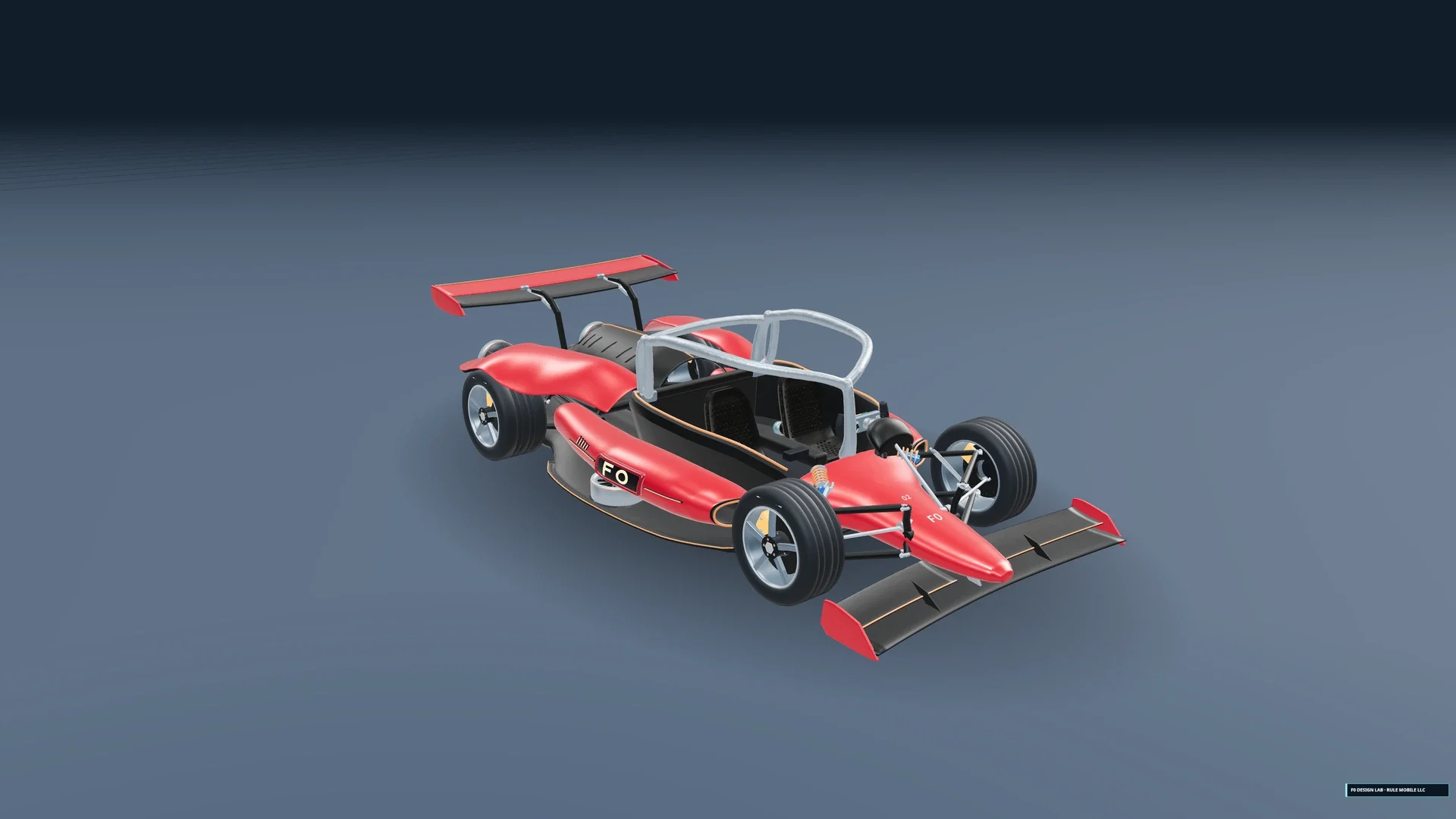
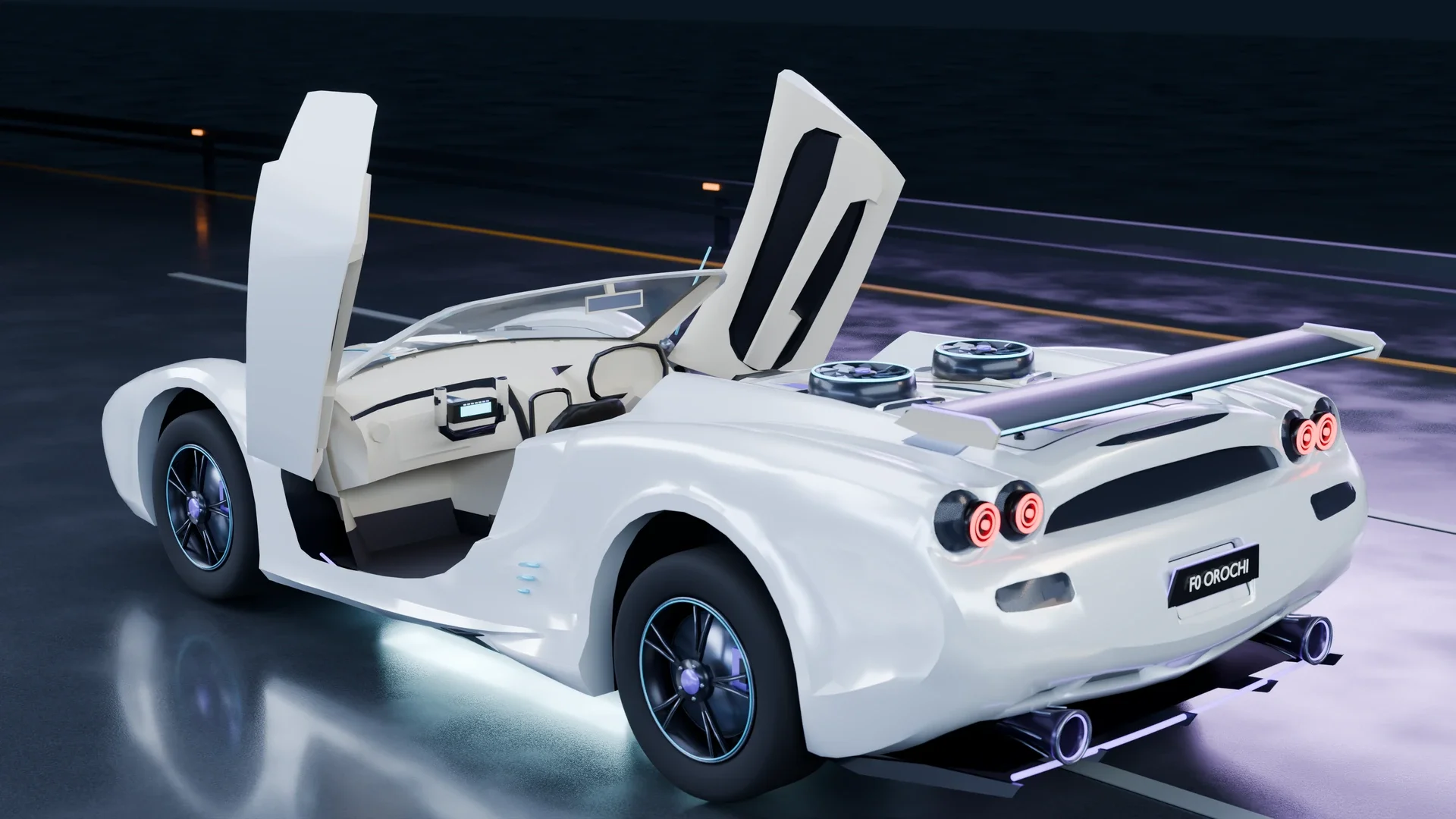
The F0 Design Lab already has another machine on the drawing board. The playable time-trial builds and new vehicle studies continue to evolve alongside each other.
Take the first lap.
Follow the next build.
The current browser challenge is ready at ThrustmasterOfficial.com. Choose a craft, livery and handling profile, finish the timed lap, and chase a cleaner run.
For the Night Squadron films, original 3D machine builds and the next engineering studies, follow @spaceraceapp. The channel also carries remastered and voice-translated episodes of the discontinued F-Zero GP anime alongside the original F0 development work.
